
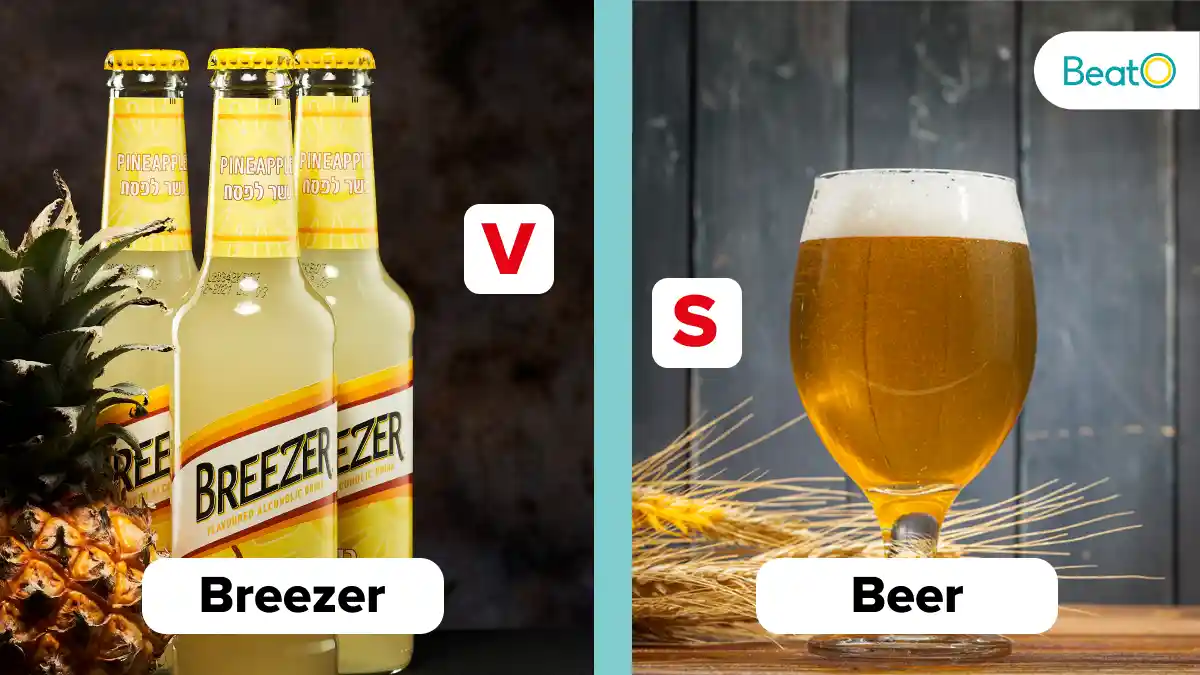
Choosing your go-to beverage for relaxation or social drinking often boils down to personal preference. However, when health, particularly sugar and calorie content factors into your decision-making, the choice between Beer or Breezer becomes more nuanced. Both have their unique flavours and appeal, but how do they stack up against each other and which one impacts your health?

Also Read:Unlocking the Potential: Is Beaten Rice Good for Diabetes?
Beer or Breezer: Which Is Better?
1. Sugar and Calorie Content
Beer’s Brew
Beer is mostly a product of barley, hops, water, and yeast additions. Sugar in beer is mainly from malted barley and this starch is subsequently converted to fermentable sugars. Sugar found in fruits is then partially consumed and partly fermented by the yeast into alcohol and carbon dioxide, so the remaining amount of this sugar is very low. Nonetheless, it all depends on the type of beer. Light beers often hold less sugar, but rich craft beers, especially those with add-ins or higher malt content, can have comparatively more sugar.
Health Insight: For example, a typical light beer portion can contain 150-200 calories and a low amount of sugar hence this is a decent drink choice if taken in moderation. It is important to note that the number of calories can be roughly double in craft beers, mainly due to their alcohol and residual sugar, which is higher than that of average beers.
Add Read:Soothe Your Smile With These Natural Home Remedies For Tooth Pain
Breezers’ Sweet Sip
On the contrary, a Breezer is made from an alcoholic base with added flavours that often have so much sugar that it is almost coated to make it more like a fruit. This added flavour not only dissociates the typical taste of alcohol to become easily over-consumed but also dramatically increases the sugar quantity in them more than most beers.
Health Insight: The energy content of these drinks can range as widely as 150-300 calories per serving, with the number dependent on specific varieties/ brands. It’s important to be mindful of more than just the calories when consuming Breezer, as most of them contain added sugars that can result in sudden spikes and crashes in energy levels. Over time, this can lead to weight gain and other metabolic issues.
2. Beer or Breezer: Nutritional Value
When it comes to nutritional value, there are no meaningful benefits that beer or breezers offer. Beer does contain some vitamins and minerals, because of barley and hops. Some researches demonstrate that beer may be good for the heart if it is consumed moderately.
Breezers are an inferior choice, offering almost nothing more than calories, sugar content, and no nutritious value. Besides contributing to overall calorie intake, excess sugar affects blood sugar levels without providing any meaningful benefits.
Also Read:Beetroot for Blood Sugar | Is Beetroot Good For Diabetes?
3. Beer or Breezer: Scientific Rationale
Minerals and Vitamins:
Beer is a source of many essential nutrients, such as vitamin B, phosphorus, folate, and niacin, beer can provide more of these minerals than bottled beverages that are frequently consumed. Alongside protein, fibre, and dietary silicon, beer is the type of drink which can be used in cerebral nourishment as well as reduction in the development of bone diseases like osteoporosis. Breezers are different in the sense they often omit these essential nutrients due to their simpler construction which includes just sweetness, flavouring and alcohol.
Silicon:
As silicon is an important component of beer, it is no doubt a consideration for improving bone density. This important element is usually not found in Breezers, which is a reason why most people who want to offset their bone loss would choose beer which typically contains 20–50 mg/L of silicon.
Antioxidants:
Beer and Breezer both contain antioxidants, which protect our body from health damage caused by free radicals which are associated with various diseases such as heart disease, diabetes, and cancer. The matter of fact is that the antioxidant content in Breezers is normally low as a result of the high sugar content and the lack of some of the ingredients that are abundant in beer.
Also read:Cashew Benefits For Healthy Heart & Weight Loss
Prebiotics:
Beer is the clear winner because it is a source of prebiotics, which are crucial for stimulating the growth of good bacteria in the gut. Beer outperforms Breezer in prebiotic content due to its fibre.
4. Beer or Breezer: Which One is Better for Health?
Looking at both beer and breezers in terms of glycemic index, light beer as a category has been known to minimise the risk of blood sugar spikes and therefore could be great for those who wish to keep their glycemic index in control. Moderation again is the rule, because a high alcohol content can also negatively affect sugar regulation in the blood and overall health, regardless of the beverage’s sugar content.
Keep in mind that although the GI Index is useful in helping us figure out the likely effects of beverages on our well being it only tells a small part of the story. Other variables such as alcohol content, total calories, and individual body conditions as well can play a role in deciding the better drink between beer and breezer.
Also Read:5 Incredible Home Remedies For White Hair
Beer or Breezer: Tips
- Be label-savvy: Make it a habit to check the label for nutritional information for both beer and breezer
- Mind your servings: Always be mindful not to drink too much as it can affect your sleep cycle and disrupt it.
- Stay hydrated: Alcohol beverages are known to dehydrate the body. Therefore you should keep drinking plenty of water and stay hydrated.
- Nutritional balance: Add different nutrient-rich foods to your diet that can reduce the negative effects on your overall health.
5. Beer Or Breezer: Which is better for Diabetic?
Both Beer and Breezer have a similar alcohol content of about 5%, and consuming alcohol can affect blood sugar levels in different ways. The alcohol content increases the blood sugar levels due to the body’s response to metabolizing alcohol. While beer does not have any sugar juice additives and with less sugar and comparatively fewer carbs, beer is a better choice of drink for diabetic patients.
Conclusion
| Nutrient | Beer | Breezer |
| Calories | 140-150 | 270 |
| Alcohol | 5% ABV | 4.8% ABV |
| Sugar | 0-1 gram | 36-38 gram |
| Protein | 2 grams | 0 |
| Carbs | 12 (300ml) | 28 (300ml) |
| Fat | 0 | 0 |
Whether you lean towards the complex flavours of beer or the sweet, refreshing taste of a Breezer, understanding and moderating your intake is key to enjoying your favourite drinks without compromising your health. By prioritising low-sugar, lower-calorie options and practising responsible drinking habits, you can find a balance that works for you.
Also Read:Benefits Of Sunflower Oil For A Heart Healthy And Radiant Skin
Disclaimer: The content of this article is compiled information from generic and public sources. It is in no way a substitute, suggestion, or advice for a qualified medical opinion. Always consult a specialist or your own doctor for more information. Beato App does not claim responsibility for this information.
Are you looking for the perfect glucometer to check your blood sugar level? Try out BeatO smartglucometerkit, affordable and easy to use.
Discover top-tier diabetes care with BeatO’s Chief Clinical Officer,Dr. Navneet Agarwal. His expertise in Diabetes ensures personalised guidance for overall health. Try out a smartglucometerand keep track of blood sugar levels now.