Onions, which are most times just regarded as kitchen fare, have been valued by many cultures over the years for their amazing nutritional properties. Onions came into use in ancient Egypt as they were not only admired for their unique flavour but also their are several benefits of Eating raw onion. Scientific research today has identified the key to the hidden power of this simple vegetable.

Consuming raw onions, in particular has been shown to have a broad range of benefits, i.e., it can increase the immune system, reduce inflammation promote heart health and is even believed to protect individuals against cancer. In their diversity in cooking and the capability of adding a twist to the flavour of numerous meals, these raw onions are a simple, yet incredibly effective way to strengthen your body and health.
This article will discuss several benefits of eating raw onions, including their nutritional profile and the 15 reasons why you should include them in your diet; the advantages could be related to your health and well-being in general, with some possible side effects being mentioned as well.
Here Are 15 Benefits of Eating Raw Onions
1. Rich in Antioxidants
Onions are the powerhouse of anti-oxidants, notably quercetin and sulfur compounds and they neutralise the harmful free radicals in the body. These free radicals are linked to the risk of many chronic diseases including cancer, cardiovascular disease and premature ageing. Raw onions can be very effective in the enhancement of your body’s natural defence system and in the prevention of oxidative stress on the cells.
2. Antibacterial and Antiviral Properties
Onion is rich in sulfur compounds and flavonoids, which provide it with robust antibacterial and antiviral benefits. The research has revealed that these substances cannot only the growth of harmful bacteria like Escherichia coli, Staphylococcus aureus and Pseudomonas aeruginosa but also viruses that cause the common cold and influenza.
3. Improved Heart Health
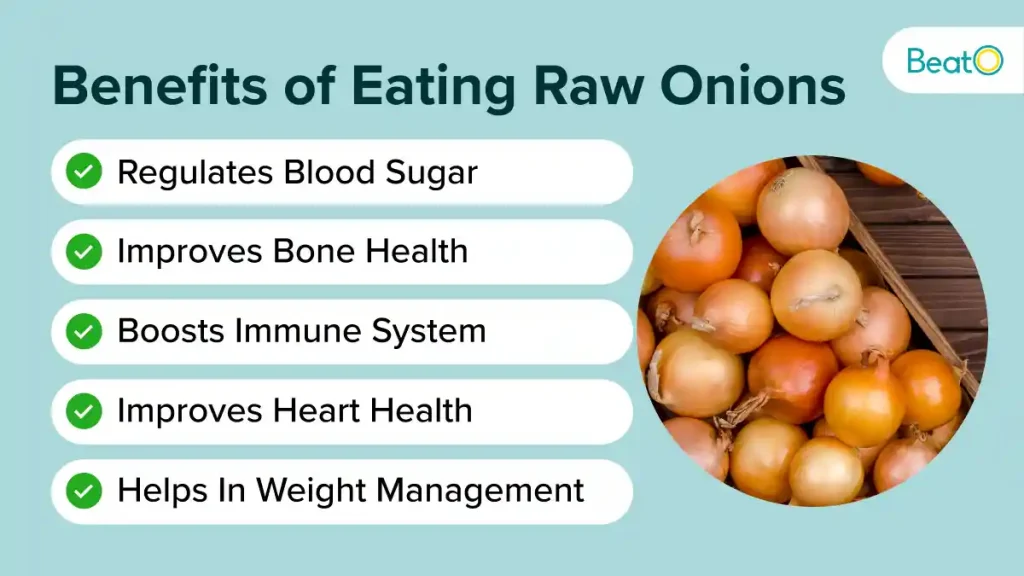
One of the most popular benefits of eating raw onion is the cardiovascular system’s improvement. The onion is a source of quercetin – a powerful antioxidant which helps reduce inflammation and lower blood pressure. As for the last, they are the source of allicin, a substance that has been found to decrease cholesterol levels and improve cardiovascular function in general.
Also read: Patharchatta Benefits You Might Not Know About
4. Blood Sugar Regulation
The onion is a good option for those with diabetes or people who are prone to get diabetes. It has been discovered that onions have a low glycemic index, indicating that they do not lead to fast increases in blood sugar. Furthermore, they are rich in quercetin and allylpropyl disulfide which have been found in studies to improve insulin sensitivity and glucose metabolism.
5. Cancer Prevention
Different studies have demonstrated that the regular ingestion of onions can be useful in reducing the risk of some types of cancer, such as stomach, colon and prostate cancer. The protective effect is due to the presence of organosulfur compounds like allyl propyl disulfide and diallyl disulfide which have been proven to have the ability to stop the growth of cancer cells and also induce apoptosis (programmed cell death) in cancerous cells.
6. Bone Health
Onions are a good source of a lot of minerals that are necessary for the body to have strong and healthy bones. They are made up of calcium, magnesium, and vitamin K which are responsible for bone mineralization and preventing diseases like osteoporosis. Furthermore, the antioxidants in onions can help the body resist oxidative stress, one of the factors that cause bone loss.
7. Digestive Support
One of the best benefits of eating raw onion is that it’s a good source of prebiotic fibres, including inulin and fructooligosaccharides, which are indigestible by the human body and, as a result, stimulate the growth of beneficial gut bacteria. These good bacteria are of particular importance in preserving the integrity of the digestive system, as well as boosting nutrient absorption and minimizing the risk of digestive problems such as constipation, bloating, and irritable bowel syndrome (IBS).
Also read: Bajra Pearl Millets Benefits: Good For Heart & Gut Health
8. Boosts Immune System
Onions are a rich source of vitamin C, an antioxidant that has a huge impact on the immune system’s functioning. On the other hand, onions are characterized by quercetin and allicin compounds which have been proven to have anti-inflammatory and antimicrobial properties that strengthen the body’s ability to fight off infections and diseases.
9. Anti-Inflammatory Effects
Chronic inflammation is not only a symptom but also a contributing factor to conditions like arthritis, cardiovascular disease, and some types of cancers. Onions contain several compounds, like quercetin and allicin, which have the potential to act as anti-inflammatory agents. With raw onion in your diet, you will be able to reduce the body’s inflammation and symptoms associated with inflammatory conditions.
10. Respiratory Health
Onions have been known to be used in traditional medicine to treat respiratory conditions such as asthma, bronchitis, and coughs among others. It is this effect that enables them to reduce mucus and act as a natural remedy for expectoration, thus making it easier to clear the airways. Moreover, onions have anti-inflammatory properties that can control inflammation in the respiratory system resulting in relief from symptoms connected to these conditions.
11. Skin and Hair Benefits of Eating Raw Onions
Onions contain a high concentration of vitamins C, and B6, and antioxidants, which are needed for healthy skin and hair. The vitamin C in onions is very helpful in the production of collagen which is responsible for skin elasticity and the disappearance of wrinkles. Moreover, the sulfur in onions helps to improve blood circulation which in turn nourishes the hair follicles, hence, stimulating hair growth.
Also read: Amazing Jeera Water Benefits For Weight Loss
12. Weight Management
Onions are surely low in calories, but they have a high content of fibre and other nutrients that can be responsible for the feeling of fullness and satiety. This can be helpful for weight management because it helps to stop eating too much and suppresses the craving for unhealthy snacks. Moreover, the substances in onion possess the ability to influence metabolism, and as a result, they could bring about an increase in calorie burning.
13. Blood Pressure Regulation
Onions contain substances, such as quercetin and allicin, that have been proven to have an active effect on blood pressure. These molecules can make the vasculature relaxed, improve circulation and reduce inflammation, which all help with the regulation of blood pressure.
14. Brain Health
One of the most acknowledged benefits of eating raw onion is the presence of antioxidants onion, including quercetin and vitamin C, which can protect the brain from oxidative stress in addition to age-related cognitive decline. Furthermore, the folate and vitamin B6 in onions are not just vital for brain health, but also for the production of those important neurotransmitters.
15. Versatility in Cooking
Eating raw onion can be very convenient and useful as it can be added to different dishes. Onions could be used in salads, sandwiches, soups and sauces alike. They have a very sharp taste that gives more depth and dimension to dishes, being a true symbol of the flavorful kitchen.
5 Potential Side Effects of Eating Raw Onions
1. Bad Breath
Besides the benefits of eating raw onion, when it comes to the most common side effect of eating raw onions, bad breath is a well-known one. The reason behind this is the sulfur compounds in onions, which are produced when they are chewed and then remain in the mouth for a while after they are eaten.
2. Digestive Discomfort
For some people particularly those with sensitive digestive systems eating raw onions may trigger symptoms like bloating, gas, and abdominal discomfort. This is because onions contain fructose, a kind of carbohydrate that may be hard for some people to digest.
Also Read: Unlocking the Potential: Is Beaten Rice Good for Diabetes?
3. Heartburn or Acid Reflux
The fact that raw onion has the potential to induce or aggravate heartburn or acid reflux symptoms in people who are predisposed to this might be the reason why this onion is not enjoyed by everyone. Onions contain compounds that can lower the pressure of the oesophagal sphincter, letting the acid in the stomach go back into the oesophagus.
4. Stinging Eyes
Slicing or cutting an onion whole can cause a feeling of sting in the eyes, which can result in too much watering or irritation of the eyes. This is a result of the formation of the sulfur compound called syn-propanethial-S-oxide, which reacts with the tear film and leads to irritation of the eye.
Also Read: Beetroot for Blood Sugar | Is Beetroot Good For Diabetes?
5. Allergic Reactions
Raw onions’ allergic reaction is rare, although some people might develop an allergic reaction. Symptoms can vary from moderate to severe, for instance, skin rashes and itching to life-threatening reactions like difficulty breathing or anaphylaxis. People who are aware of their onion or other Allium family-related allergies should be extra careful when consuming them.
Conclusion
Rarely can one find another food source as nutrient-rich as raw onions, and this should be the primary choice for any person who cares about their health. It is unbelievable how many vitamins, minerals, and potent phytochemicals are in these food groups. Each of them plays a role in strengthening the body in different ways.
Benefits of eating raw onions not only improves immunity and fights inflammation but also has benefits for heart health and weight loss. The positive effects of including raw onions in your meals are difficult to ignore. The anticancer effect and sugar regulation feature of them are those that justify the term superfood.
Besides several onion benefits, raw onions are so flexible in cooking, that they easily add a unique flavour to many dishes with their favourite sharpness. Whether as part of salads, stir-fries, or dips and sauces, they provide a whole new dimension to any dish.
Disclaimer: The content of this article is compiled information from generic and public sources. It is in no way a substitute, suggestion, or advice for a qualified medical opinion. Always consult a specialist or your own doctor for more information. BeatoApp does not claim responsibility for this information.
Throw out your non-verified glucometer and try the BeatO clinically approved smart glucometer kit. Check your blood sugar level instantly. Try out the BeatO diabetes care program for a more organized healthcare routine.
Looking for a seasoned diabetologist? Choose Dr. Navneet Agarwal, an expert with 25+ years of experience. His specialisation in diabetology and obesity management provides personalised care. Elevate your health with a doctor’s recommended glucometer, buy now.