
One of the most frequently searched questions related to dates is, “Why are dates called dried fruit?”. While the answer is straightforward: they are devoid of water/moisture, it is important to know that dates are naturally cured to maintain their rich nutrients and minerals. Yes, dates contain much more than its sweet taste. However, it is uncertain when they were first cultivated as a source of food, but it is safely assumed that it happened around 4000 B.C. Although it is native to dry and arid regions of the Middle East and Africa, it is now grown in many North and South American geographies.

Also read: Jamun Benefits: Good For Blood Sugar Regulation & Heart Health
There are dozens of date varieties, each with a distinct shape, taste, and vitamin and mineral content. The health benefits of dates, khajoor, are as diverse as their names. Some popular names for this dried fruit include Medjool, Barhi, and Dayri.
Introduction to Dates – Nature’s Energy-Packed Sweet Treat
It is a well-known fact that dates are an energy source. It simply means even a single piece has high-energy content. Here’s the complete list of nutrients in the Dates, along with the energy content.
| Nutrients | Amount |
|---|---|
| Calories | 66.5 (kcal) |
| Fat | 0.04g |
| Sodium | 0.24mg |
| Carbohydrates | 18g |
| Fiber | 1.61g |
| Added sugars | 0g |
| Protein | 0.43g |
Here Are Some Nutritional Facts About Dates
- Most of this energy is in the form of glucose and fructose.
- Dates also contain generous amounts of fibre, nutrients, and minerals.
- Even people with diabetes can consume 2-3 dates daily because their “Glycemic Index” isn’t very high.
Although the calories in dates may vary, depending on their type, it is irrefutable that they all are power boosters. Mentioned below are 10 unknown benefits of dates (khajoor).
Exploring the Health Benefits of Dates
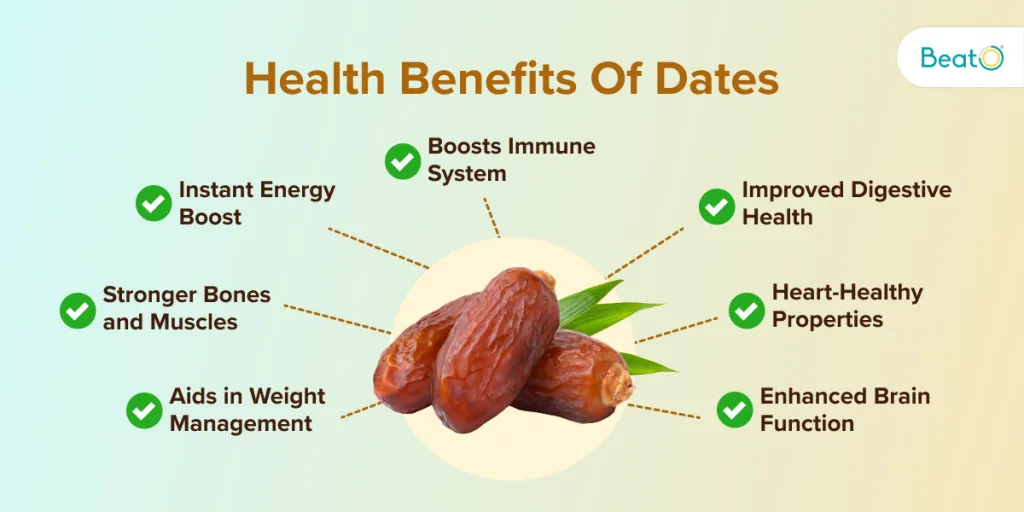
Instant Energy Boost
So, what makes dates a source of instant energy? The answer is the presence of condensed sugars. Moreover, dates contain fibre, carbohydrates (75mg), and proteins, making them an excellent food for instant energy. 100 grams of dates are packed with more than 300 Kcal of energy. If that is not enough, dates have 5.0g of proteins, 650 mg of potassium, and 2mg of sodium. Dry dates benefits do not end here. It has an impressive amount of antioxidants and compounds that provide good overall health.
Improved Digestive Health
Dates contain several essential micro-nutrients and minerals. Regular consumption helps develop a healthy gastrointestinal system. Some of the important contributors to this improved GI tract are –
- The soluble and insoluble fibre in dates. It provides freedom from constipation and diarrhoea.
- Some of the nutrients in dates reduce inflammation in the body.
- Dates also contain compounds such as amino acids and prebiotics (fermentable fibres), which improve the good-to-bad bacteria ratio.
In a few studies, it has been found that dates help fight against microbes such as E-coli which are known for their lethal behaviour and are highly dangerous for humans.
Heart-Healthy Properties
Several health experts recommend the consumption of edible potassium every day to keep blood pressure at an optimal level. Dates are packed with this mineral and low in sodium, the culprit responsible for increased pressure in the blood vessels and across the organs. 100 grams of dates contains 600/700 milligrams of potassium, which equals around 30 per cent of the human body’s daily needs. Of course, too many dates can be counterproductive for certain people, especially those with chronic illnesses.
Also read: Dates for Diabetes: Impact of Dates on Blood Sugar Levels
Stronger Bones and Muscles
Yet another fact that many people are unaware of is that the human body not only requires bone-strengthening minerals but also needs a carrier or absorbers. Dates fulfil these demands. It has a healthy amount of selenium, manganese, and magnesium.
It contains calcium and phosphorus, which act as carriers. No wonder many orthopaedics recommend dates as a healthy and tasty supplement for people suffering from osteoporosis, apart from standard medicines. The benefits of dates for men, vis-à-vis joints and inflammation, are simply unparalleled.
Enhanced Brain Function
Some complex compounds normally found in the human brain are responsible for good memory, learning ability, and distinct behavioural attributes. Adverse changes in these parameters can affect the concerned individual. This may cause Alzheimer’s disease, restrict communication between various brain cells, and cause brain plaque leading to serious neurodegenerative illnesses.
One of the most underrated advantages of dates is that it reduces inflammation due to the presence of antioxidants and flavonoids.
Aids in Weight Management
Are dates good for weight loss? Absolutely! And the reason is that they are loaded with soluble and insoluble fibres. What does this mean in terms of weight management? Firstly, non-soluble fibres keep the stomach full for longer, curbing the urge to eat frequently. Secondly, it prevents the absorption of (unprocessed) fats, preventing weight gain. On the other hand, the antioxidants in dates keep the metabolism rate healthy.
Natural Remedy for Anaemia
The benefits of dates for women’s overall health and iron, in particular, is an open secret, and one of the most common causes of anaemia in women across the world is iron deficiency. Incidentally, it is an essential component of haemoglobin that forms an integral part of RBCs or red blood corpuscles. Lack of iron simply means the erratic supply of oxygen to the vital organs, resulting in fatigue and loss of consciousness. 100 grams of dates typically contain between 0.5mg to 5mg of iron.
Interesting Fact – Black dates have 5 to 10 times more iron than the other varieties.
Skin Health and Anti-Aging Effects
The term “oxidative stress” is not known to many. It is a state when free radicals take over a human body, and the result:
- It causes the skin to crack/form wrinkles.
- Lose youthful bounce.
All this can eventually lead to accelerated ageing in young people—dates brim with antioxidants. Flavonoids kill free radicals, preventing cell damage and the onset of several age-related and non-age-related negative triggers. Dates benefits for skin are not just limited to ageing. It improves skin quality, glow, and elasticity.
Boosts Immune System
Since time immemorial, dates have been considered a superfood and immune system booster. The fantastic nutritional value of dates strengthens the body’s resistance against fungal, viral, and bacterial attacks. Apart from boosting the immune system, it is also a great food for fighting against cardiovascular illnesses.
Hormonal Balance and Sexual Health
Although studies have not found any connection between dates and improved libido, or sexual health, it has nonetheless been exploited as an aphrodisiac for a long time. It is assumed that dates correct hormonal imbalance and overall sexual health because of the presence of amino acids, micronutrients, and a combination of minerals.
Read More: Which Fruits to Avoid if You Have Diabetes?
Creative Ways to Consume Dates
Although raw dates taste delicious and are easily consumable, they can also be consumed in other ways. Check out the following options and add them to your daily diet.
- Dates for weight loss – Create water and dates paste, and use it in tea, milk, etc.
- Dates can be liquefied and turned into tasty candies along with other dried fruits.
- Chocolate-coated dates are yet another yummy way to consume this highly delicious fruit.
Conclusion: Benefits of Dates
Dates are not just dried fruit; they are a wholesome food, a powerhouse of minerals and micronutrients. Although it is found and cultivated in dry, arid regions, it can withstand deluge with equal resilience. The benefits of dates include relief from a number of chronic diseases, and it is also a perfect food to combat lifestyle health issues such as premature ageing, fatigue, compromised immune system, and pregnancy upheavals.
Disclaimer:The content of this article is compiled information from generic and public sources. It is in no way a substitute, suggestion, or advice for a qualified medical opinion. Always consult a specialist or your own doctor for more information. BeatoApp does not claim responsibility for this information .
Dr. Navneet Agarwal is an established and highly skilled Diabetology with over 25 years of experience in Diabetology & Obesity. He is well-regarded for his quality and patient-centered diabetes care. Also, keep track of your blood sugar levels with a Doctors’ approved smart glucometer and elevate your healthcare routine.